UW–Madison and Extension collaborate on Wisconsin’s water quality
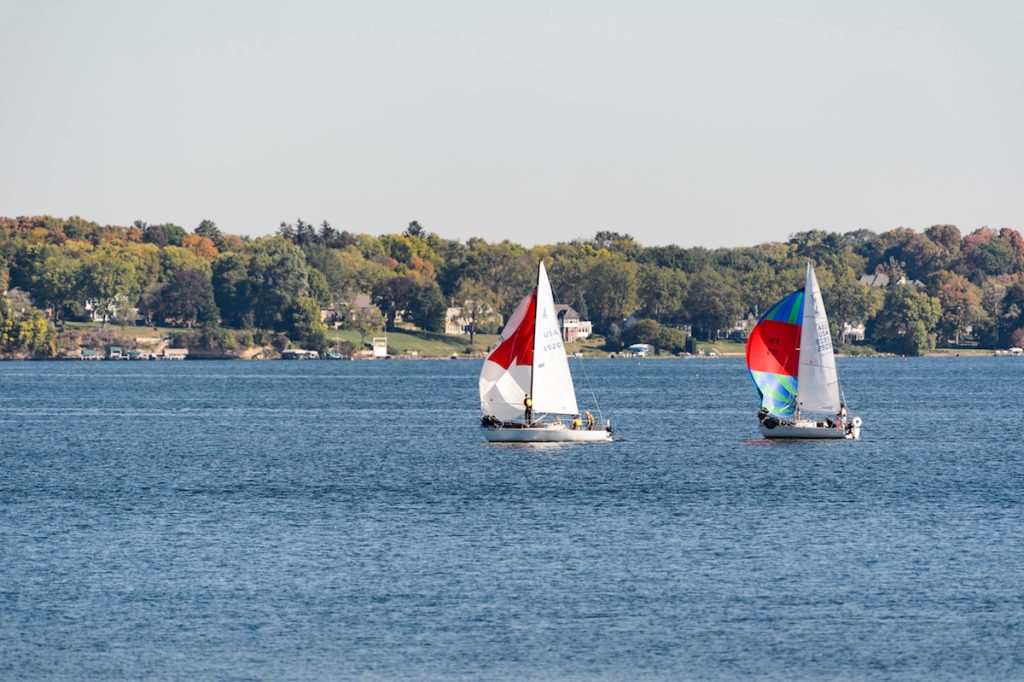
Lake Mendota during an autumn morning in 2017. “The value and importance of water is what brought us together today,” said the Division of Extension’s Tricia Gorby at the event “Improving Surface Water and Groundwater Quality.” Photo: Jeff Miller
Participants included representatives from Extension programs around the state and UW–Madison researchers working on water-related projects across academic disciplines.The event, called Improving Surface Water and Groundwater Quality, is one of several funded this year by the Chancellor’s Office. The first, centered on the state’s opioid crisis, took place in March, and four others are planned for fall. The idea is to help connect the research, scholarship and resources of UW–Madison with the people and on-the-ground expertise of Extension, which has a presence in each of the state’s 72 counties. “Extension is a great asset to UW–Madison, and it embodies the Wisconsin Idea,” said Karl Martin, dean of the Division of Extension. “We meet people where they live, with evidence-based resources and facilitation skills. It’s not just about pushing information out; the goal of Extension is to use those local connections to engage with citizens to address their issues and figure out what their needs are at the local level.” At the same time, thousands of faculty, staff and graduate students at UW–Madison, who have the capacity to engage in research that meets needs currently not being addressed, are pursuing research that affects the lives of Wisconsin residents.
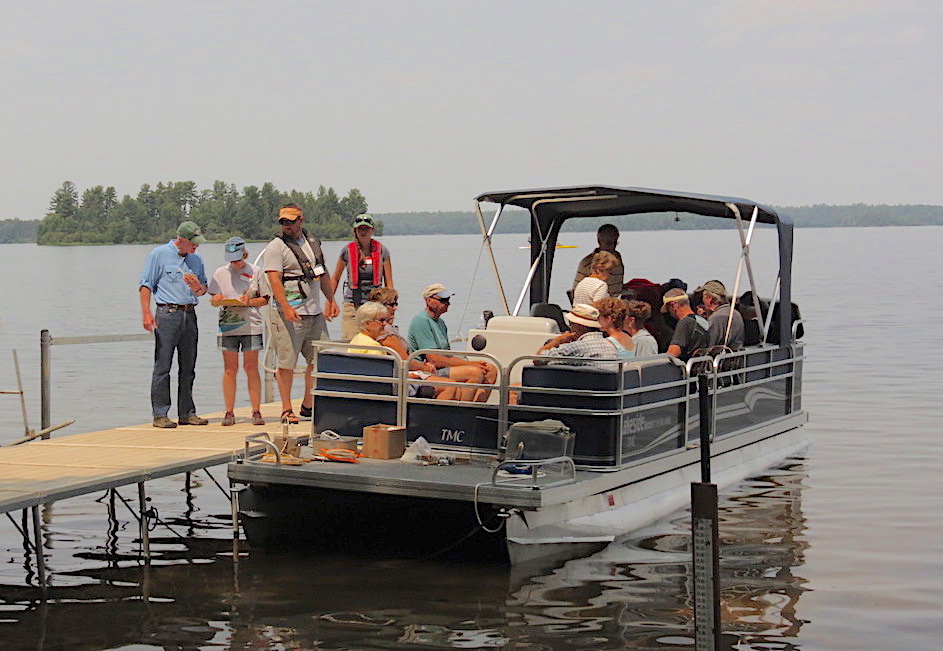
Visitors to Trout Lake Station in Boulder Junction, Wisconsin, hear from UW–Madison Center for Limnology scientists during the research station’s annual open house. “We are used to having a lot of water,” Emeritus Director Stephen Carpenter said. “But our demand for water has exceeded our supply.” Photo by: Kelly April Tyrrell
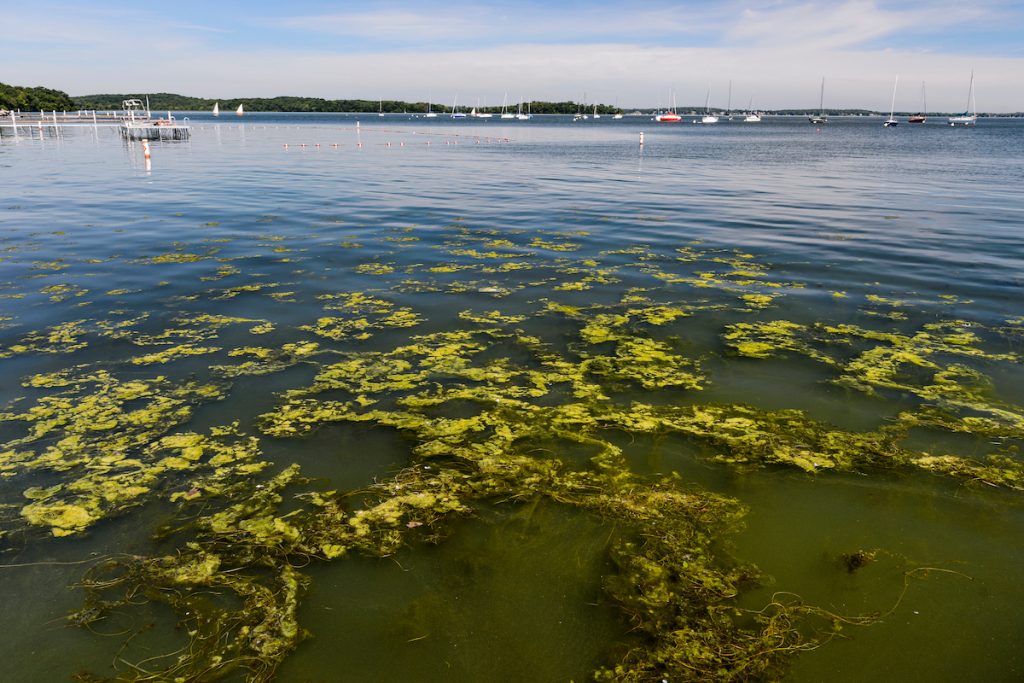
Algae blooms form on the surface of Lake Mendota near the UW campus in July 2018. Wisconsin’s lakes experience harmful algae blooms each summer as phosphorus runoff creates conditions that favor their growth. Photo: Jeff Miller
“We meet people where they live, with evidence-based resources and facilitation skills. It’s not just about pushing information out; the goal of Extension is to use those local connections to engage with citizens to address their issues and figure out what their needs are at the local level.” Karl MartinA panel of speakers followed Carpenter to highlight opportunities for Extension and UW–Madison to collaborate to preserve and protect Wisconsin’s water resources and to address the needs of residents. Panelists included Center for Limnology director and chair of Water at UW–Madison’s Jake Vander Zanden; Water Resources Management Program Chair Anita Thompson; Professor of Civil and Environmental Engineering Steve Loheide; Jim Hurley, director of the Aquatic Science Center; Ken Bradbury, director of the Wisconsin Geological and Natural History Survey; and Ken Genskow, Extension specialist and chair of the Department of Planning and Landscape Architecture. Out of the conversation came a big idea from Loheide, who suggested the creation of what he called an “extensionship,” in which Ph.D. students at UW–Madison might apply for funding to work with Extension agents to plan and implement an extension/outreach program based on their doctoral research. “The Extension agent then becomes the repository of that science,” Loheide said. “I think students are where we have the bandwidth to make an impact. Someone who spends five, six, seven years studying something is invested. They want their research to benefit people.” The Nelson Institute’s Robbins expressed his excitement for the momentum around addressing water quality — from the governor’s initiative to a bipartisan state legislative task force and a cluster hire of freshwater sustainability faculty — and for renewed focus on ways campus and Extension can work together. “We have an envious responsibility to make an impact and water is a great venue to do it,” said Extension’s Martin. “We have done it before and now we can do it better … Everyone wants to make a difference with their work and the best way to see those differences is in your home state.” Kelly April Tyrrell | University Communuications