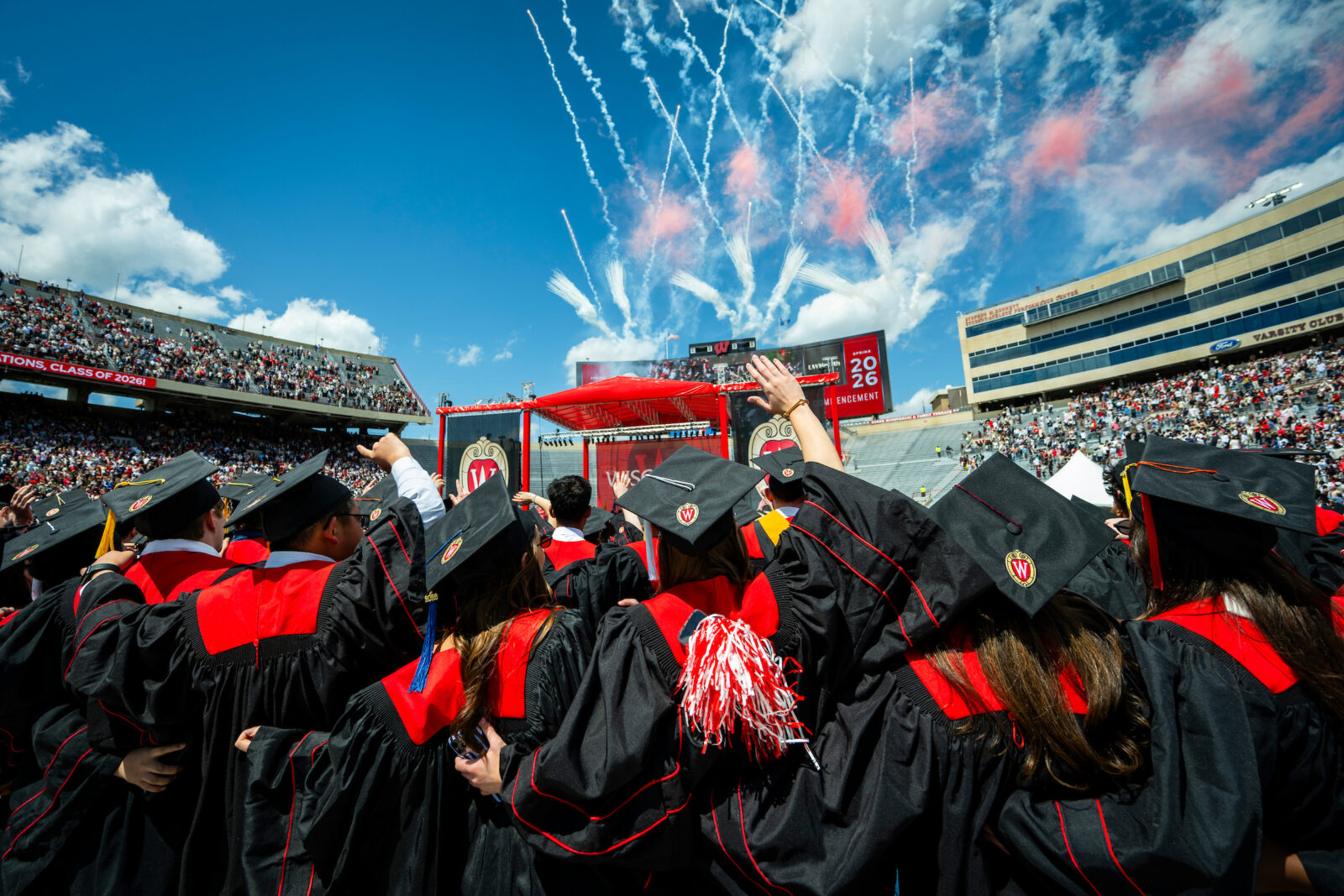
How UW-Madison delivers an affordable, high-value education for Wisconsin families
UW-Madison is committed to keeping a world-class education affordable and within reach for Wisconsin families. Paired with strong graduation and career outcomes – it’s an investment that pays off long after students leave campus.
A strong return for Wisconsin
Competitive Tuition
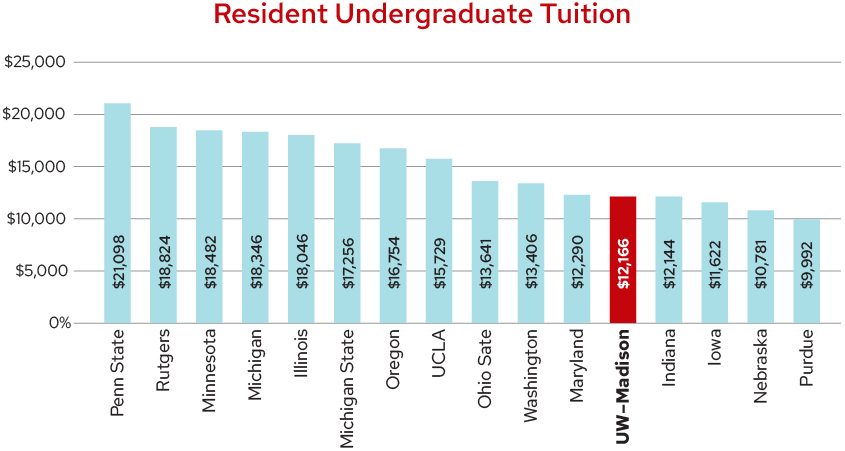
UW-Madison offers Wisconsin residents access to a world-class flagship education at a price below most public Big Ten peers.
Targeted Financial Support
One in four Wisconsin resident undergraduates receives aid that covers full tuition and fees or the full cost of attendance through signature aid programs.
Strong Outcomes
UW–Madison students graduate at high rates, finish quicker than most peers and enter the job market or graduate programs highly prepared and ready to contribute.
Resident tuition compares favorably with Big Ten peers
Published 2024-25 tuition and mandatory fees place UW-Madison fifth-lowest among the conference’s public universities.
Clear commitments for Wisconsin students
The university combines broad, income-based programs with targeted pathways for transfer students, Native Nations students and future teachers.
Bucky’s Tuition Promise
Guarantees scholarships and grants for tuition and segregated fees for incoming Wisconsin residents with family adjusted gross income of $65,000 or less.
Bucky’s Pell Pathway
Meets institutional financial need without loans for incoming Pell-eligible Wisconsin residents through grants, scholarships and work-study.
Wisconsin Tribal Educational Promise
Meets the full in-state cost of attendance for eligible Wisconsin residents enrolled in one of the state’s 11 federally recognized tribes.
Wisconsin Teacher Pledge
Supports tuition, fees, testing and licensing costs for teacher-education students who pledge to teach in a Wisconsin PK-12 school for three to four years.
Badger Promise
Provides up to four semesters of resident tuition and segregated-fee support for eligible Wisconsin resident, first-generation transfer students.
Support Beyond Financial Aid
Advising, career services, financial-wellness resources, emergency support and student communities help Badgers remain enrolled and succeed.
Important note: Tuition programs are funded through institutional dollars and private gifts, at no cost to taxpayers.
Value for residents
#5
Lowest tuition & fees among the Big Ten’s 16 public universities
#12
Public university in the nation,
U.S. News & World Report, 2026
$113m
In institutional financial aid provided to Wisconsin residents
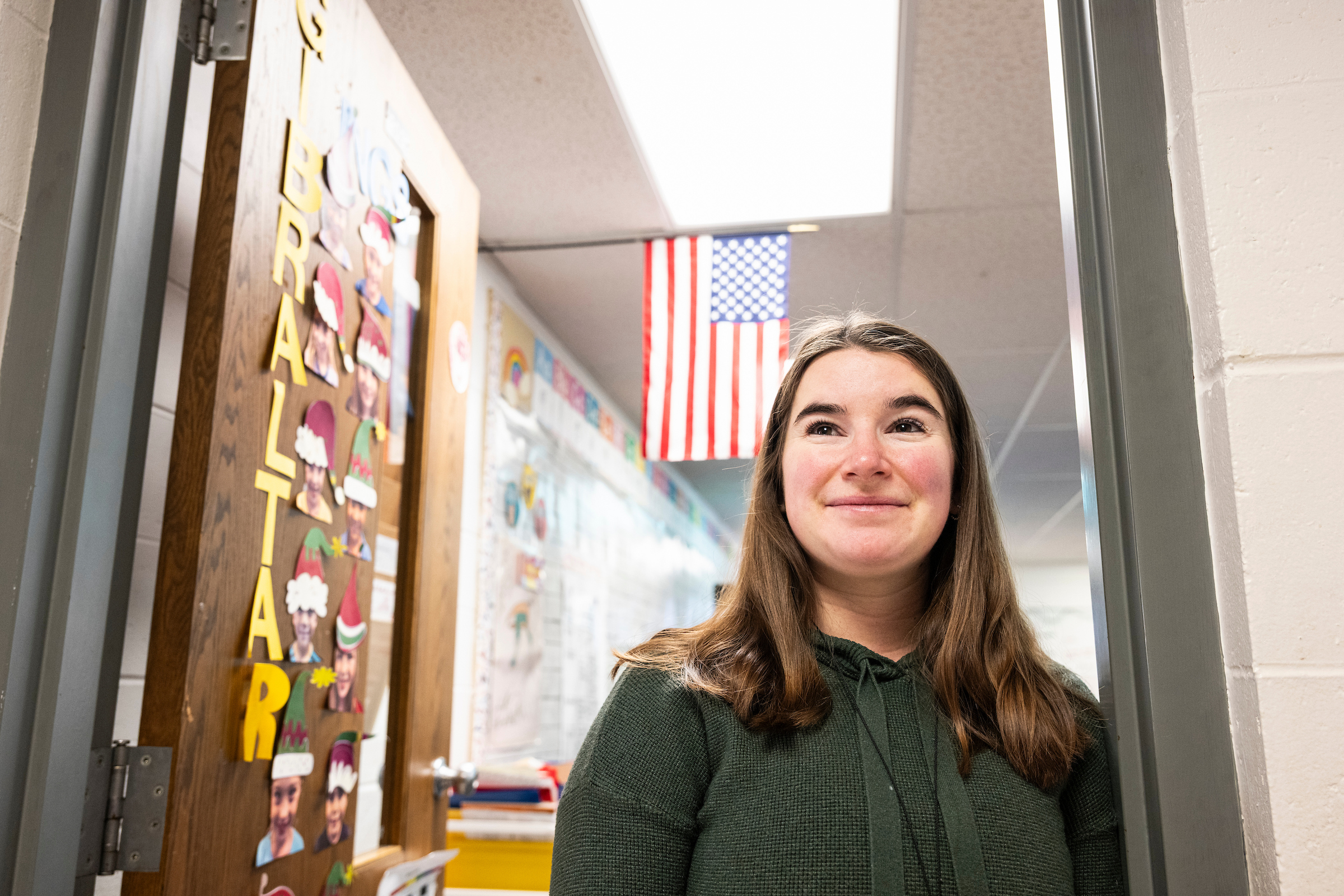
“Bucky’s Tuition Promise alleviated so many financial burdens. The idea of being able to focus solely on school during the academic year was huge.”
Bucky’s Tuition Promise recipient and third-grade teacher at Door County’s Gibraltar Elementary School
Tuition is only part of the story
Financial support, debt levels and time to degree determine what college ultimately costs families. UW-Madison is a leader across all four.
67%
of 2024-25 bachelor’s degree recipients graduated with no student loan debt.
25%
of Wisconsin resident undergraduates receive full tuition-and-fee or full-need support through UW tuition programs.
89.7%
six-year graduation rate for the fall 2019 cohort.
3.78 years
average time to degree in 2024-25 – the university’s lowest on record.

“I don’t think I would be a teacher today if I didn’t have the Teacher Pledge.”
Wisconsin Teacher Pledge recipient and math teacher at Dodgeville High School
Outcomes that deliver lasting value
UW–Madison graduates move quickly into careers and advanced education, with thousands of alumni strengthening communities across Wisconsin.
$73,000
Median full-time salary reported by employed 2024-25 bachelor’s degree respondents.
91%
First Destination Survey respondents said UW-Madison prepared them for the next step in their career path.
196,190
UW-Madison alumni live in Wisconsin across every one of the state’s 72 counties.
Explore more outcomes of UW–Madison graduates
Connect with State Relations
State Relations can provide additional information on college affordability, student outcomes and statewide impact—and connect legislators with students, programs and partners in their districts.